Emperor Keitai: The Fukui Prince Behind the World’s Oldest Monarchy
Hailing from Fukui Prefecture, Emperor Keitai is the likely origin of Japan’s current imperial line.
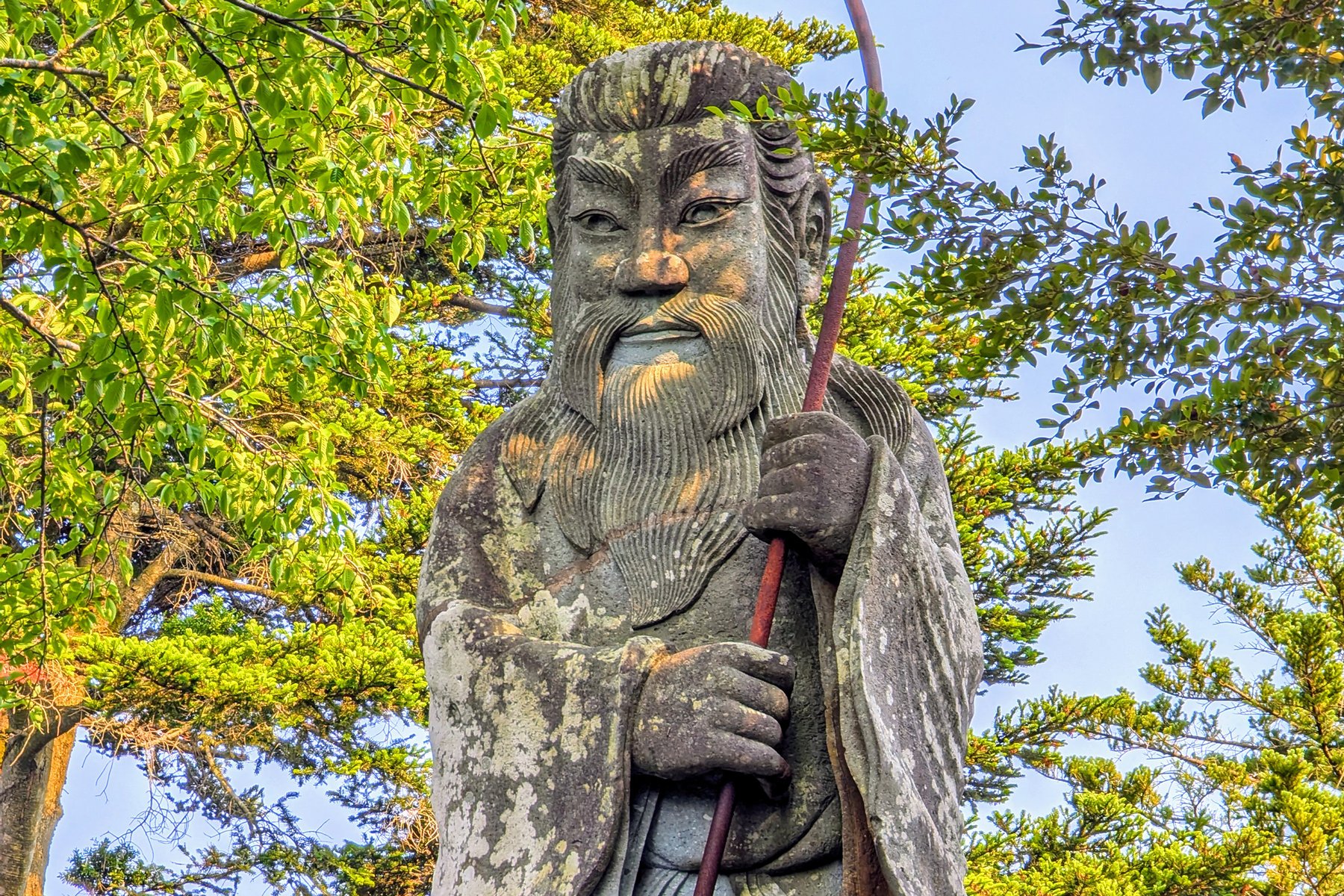
Cover photo: Shakudani stone statue of Emperor Keitai atop Asuwa Mountain, Fukui City, Fukui Prefecture, Japan (2026). Photo by Danny With Love.
Japan’s Imperial Family
Japan’s Imperial Family is often described as the world’s oldest hereditary monarchy. Reigning Emperor Naruhito (徳仁陛下) is officially recognized as the nation’s 126th emperor, with the line traditionally tracing its origins to Emperor Jimmu (神武天皇), a direct descendant of Shinto sun goddess Amaterasu (天照大神).
While the earliest emperors are shrouded in legend, many historians regard the 26th king, Emperor Keitai (継体天皇) from Fukui Prefecture, as the earliest identifiable ancestor of the current Imperial Family.
A leading expert on royalty, Professor Naotaka Kimizuka (君塚直隆) has argued that the current imperial line began with the reign of Emperor Keitai and Professor Haruhito Kochi (河内春人) — author of Emperor Keitai (2026) — calls him the “founding king” of Japan’s monarchy.
Keitai and the Succession Crisis
When Emperor Buretsu (武烈天皇) died without an heir in 506 AD, the Yamato court suffered its first major succession crisis. Surprisingly, court leaders selected a distant descendant of Emperor Ojin (応神天皇) living far from the court’s political center: 57-year-old Emperor Keitai from modern-day Fukui Prefecture.
First called Prince Odo (男大迹王), Keitai was the son of Princess Furihime (振媛) and Prince Hikoshi of Omi (彦主人王). He was born in Takashima (in modern Shiga Prefecture) but raised in his mother’s hometown of Takamuko (Sakai, Fukui Prefecture) following his father’s death.
“Keitai essentially pioneered a new royal lineage,” argues historian Nobuya Ohashi (大橋信弥). Indeed, Professor Akira Koshizawa (越沢明) notes that Keitai is “the only emperor who was born and raised outside the Kinki region … [and also] the only emperor to have ascended the throne not from a direct line of descendants”.
During his reign, Emperor Keitai suppressed the Iwai Rebellion in Kyushu, strengthened diplomatic relations with kingdoms of the Korean Peninsula, and helped consolidate political power. Crucially, many historians regard his reign as the starting point of the imperial lineage that continues uninterrupted to the present day.
The King from Fukui
Although Emperor Keitai played a pivotal role in the history of Japan’s monarchy, he remains relatively unknown today. Yet in Fukui Prefecture, his legacy is still alive.
According to local tradition, Prince Odo governed the ancient Koshi region before ascending the throne. He is credited with developing irrigation across the Echizen (Fukui) Plain. A famous tale claims he fired an arrow from Mount Asuwa toward the Sea of Japan, causing the waters to recede and creating new land for cultivation.
Keitai is likewise associated with local industries such as Echizen washi (paper), lacquerware, and the mining of Shakudani stone. Whether history or folklore, these stories reflect a deep connection Fukui locals share with the emperor.
I first encountered Emperor Keitai by chance, coming across his statue atop Mount Asuwa. Learning that a man raised in Fukui Prefecture became emperor — and is the likely foundation of Japan’s Imperial Family — gave me a new appreciation for my adopted hometown. I hope that more people will learn about this historic king and discover the charms of Fukui.