Daianzenji Temple: Resting Place of Fukui’s Samurai Lords
The quiet Zen temple is a testament to Fukui’s history and craftsmanship.
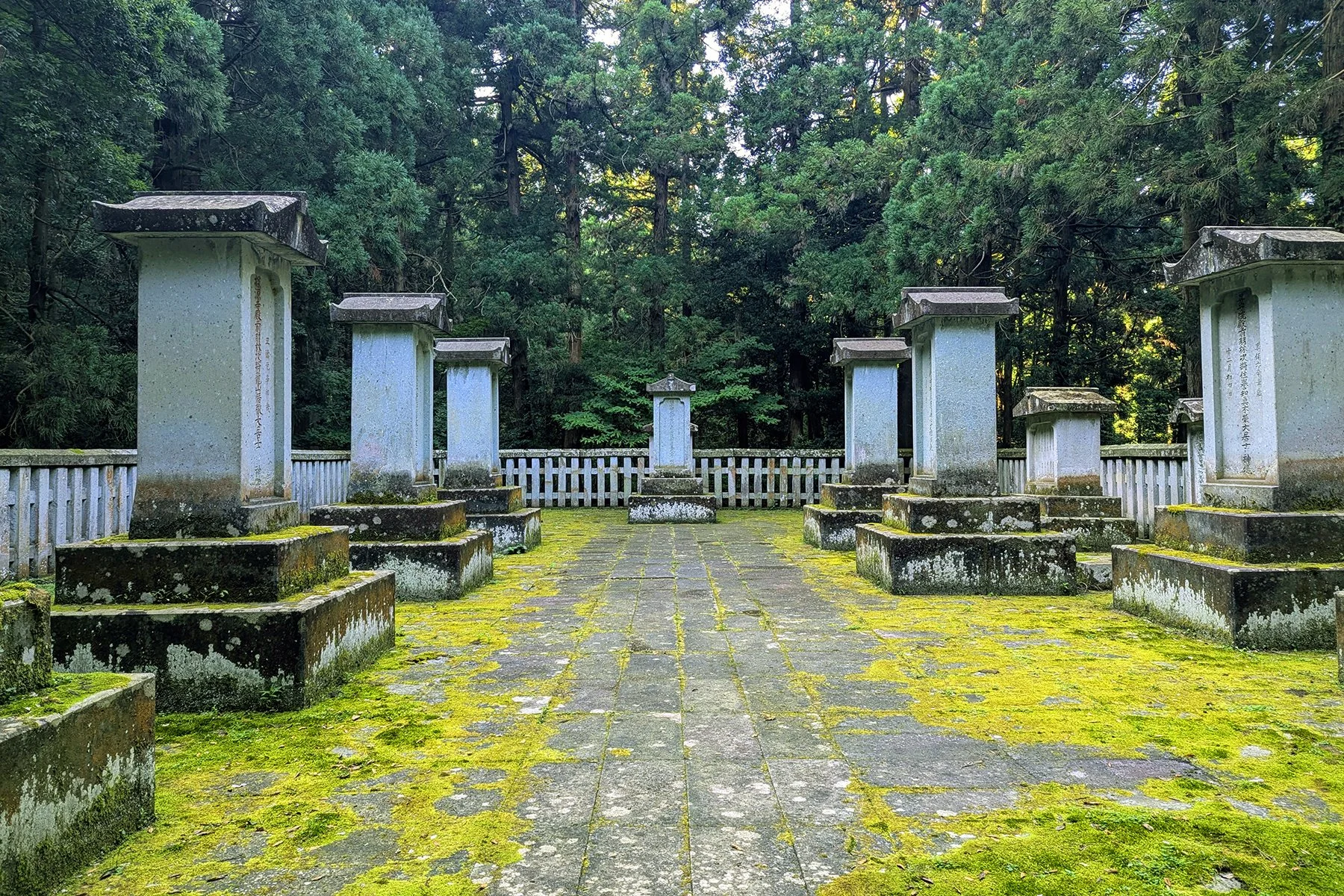
Cover photo: Senjojiki Cemetery (千畳敷), final resting place of Yūki Hideyasu (結城秀康) and the Matsudaira clan, at Daianzenji Temple (大安禅寺), Fukui City, Fukui Prefecture, Japan (2026). Photo by Danny With Love.
About Daianzenji
Nestled in the western mountains of Fukui City, Daianzenji Temple (大安禅寺) is one of Fukui’s most important Zen temples — and a hidden gem. The temple complex stands as a testament to the region’s history and craftsmanship, boasting the only buildings in Fukui City designated as National Important Cultural Properties (重要文化財). While its magnificent main hall remains under restoration through 2029, visitors can still explore one of Japan’s finest samurai cemeteries.
According to temple tradition, Daianzenji traces its origins back over 1,300 years to a temple founded by the monk Taichō (泰澄). It became the center of a thriving town until it was destroyed during the wars of Oda Nobunaga (織田信長). In 1658, Matsudaira Mitsumichi (松平光通) rebuilt Daianzenji, establishing it as the family temple of the Fukui Matsudaira clan. Today, generations of the Fukui Matsudaira family rest at Senjojiki Cemetery (千畳敷) alongside Yūki Hideyasu (結城秀康), the first lord of Fukui Domain.
Reiwa Restoration
Built during the early Edo period, Daianzenji Temple has stood for more than 370 years. After centuries of deterioration caused by heavy snowfall, earthquakes, and even wartime air raids, the largest restoration project in the temple’s history began in 2018 during the Reiwa era. All eight National Important Cultural Property buildings are currently being restored and the main hall is closed to the public. The project is scheduled to be completed by the end of 2029.
The restoration is expected to cost approximately 2.6 billion yen (about $16 million USD). Besides preserving one of Fukui’s most important historic temples, the project provides a valuable opportunity to pass on traditional Japanese carpentry techniques to a new generation of craftspeople.
According to the temple, the main hall is the second-largest surviving Zen temple hall from Japan’s early Edo period. The temple’s principal image is a Heian-period Kannon (観音) statue, and the interior is decorated by Fukui Domain’s official painter, Kanō Motoaki (狩野元昭), including his masterpiece, Sixteen Arhats (十六羅漢図). I’m looking forward to seeing the restoration completed someday!
Senjojiki Cemetery
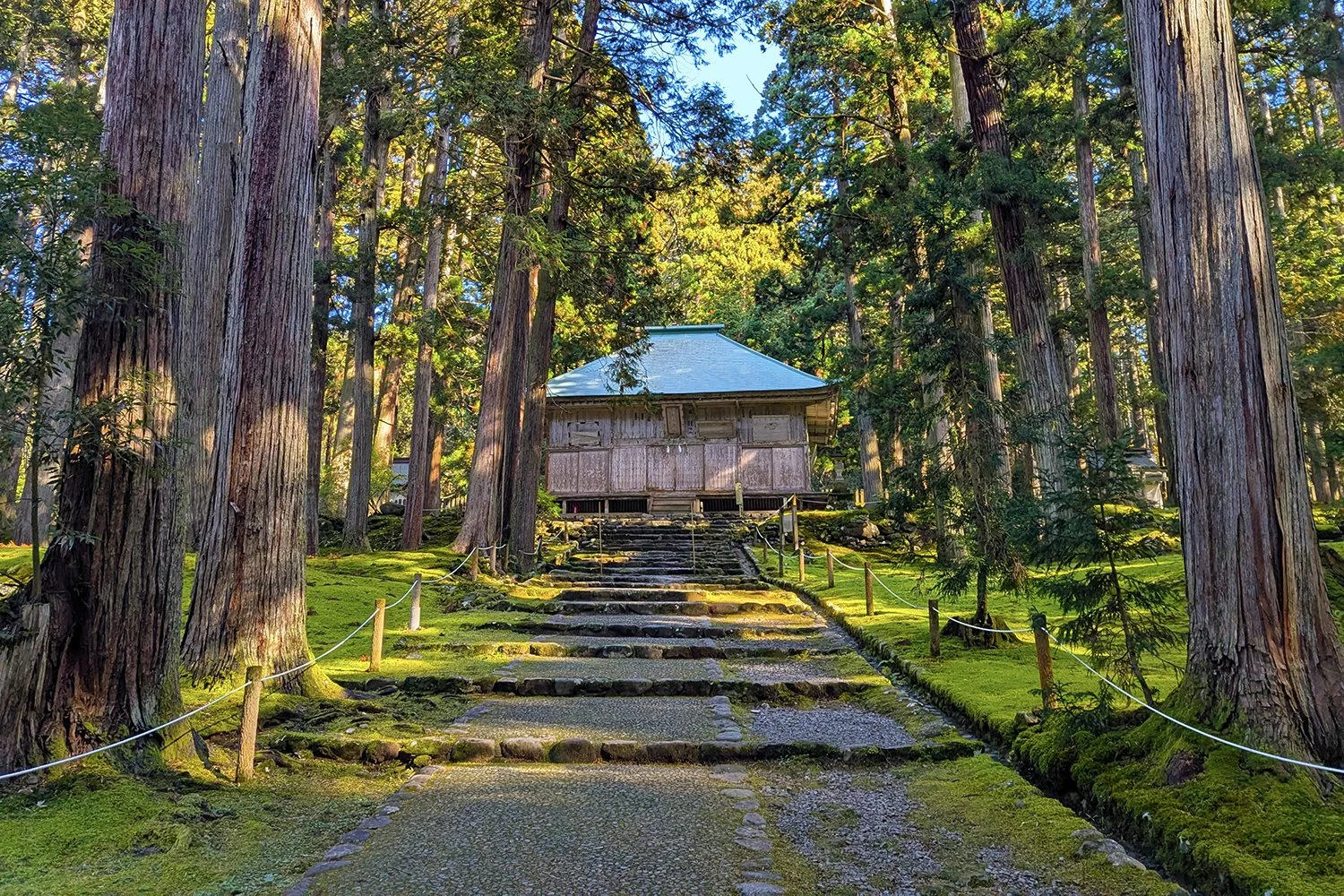
Daianzenji Temple’s greatest attraction is Senjojiki Cemetery (千畳敷), the final resting place of generations of the rulers of Fukui Domain. Regarded as one of Japan’s finest samurai cemeteries, this hidden mountain graveyard offers a glimpse into the prestige of the Fukui Matsudaira clan. Surrounded by forest and carpeted in moss, the cemetery is both imposing and remarkably peaceful.
At its center lies the grave of Yūki Hideyasu (結城秀康), son of Tokugawa Ieyasu (徳川家康) and the first lord of Fukui Domain. Appointed lord in 1601, Hideyasu oversaw the construction of Fukui Castle before passing away from illness in 1607. His descendants ruled Fukui Domain for more than 250 years and were laid to rest here alongside him.
Built around 1660 from 1,360 slabs of locally quarried Shakudani stone (笏谷石), Senjojiki Cemetery showcases the exceptional craftsmanship of Fukui’s traditional stonemasons. The cemetery gate is adorned with finely carved aoi (hollyhock) crests of the Tokugawa and Matsudaira families alongside the goshichikiri (paulownia) crest of the Toyotomi family. The towering gravestones stand 3.7 meters (12 feet) tall — the tallest feudal gravestones in Japan, surpassing those of the Tokugawa family in Tokyo.
Together, the monumental gravestones, masterful stonework, and tranquil mountain setting make Senjojiki Cemetery a powerful testament to Fukui’s samurai heritage and enduring craftsmanship.
Meditation Hall
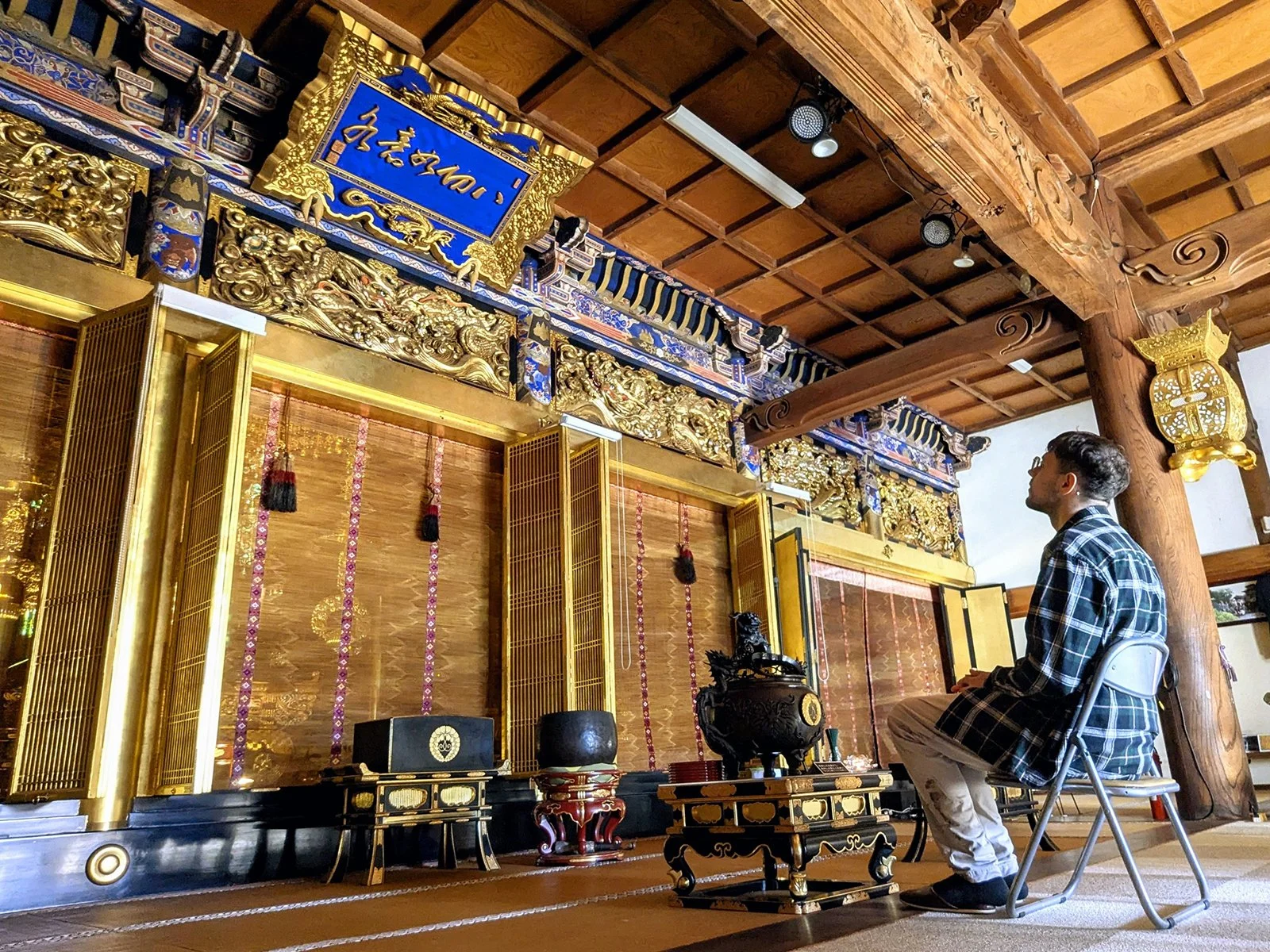
Daianzenji’s Zazen Training Hall remains open throughout the restoration project. Zazen (坐禅) is the Zen practice of seated meditation, and visitors are welcome to meditate here independently. Inside, don’t miss the painting of Bodhidharma (達磨), the founder of Zen Buddhism.
Access to Daianzenji
Daianzenji is open daily, from 9:00 to 17:00 (5:00 PM). Admission is 500 yen for adults (about 3 USD). From JR Fukui Station, take Keifuku Bus (京福バス) Route 10 to Daianji Monzen, then walk about 18 minutes to the temple.
Best Time to Visit Daianzenji
Early summer is one of the best times to visit Daianzenji, when blooming roses and hydrangeas color the mountain. The surrounding forest is lush and vibrant, while the cool air makes for a refreshing and peaceful walk through Senjojiki Cemetery. Even while the main hall is under restoration, this historic Zen temple remains one of Fukui’s best places to experience the region’s history, craftsmanship, and natural beauty.