Fukui Castle Kun-Yagura Tower Restoration Project
The reconstructed tower will become a new historical landmark.
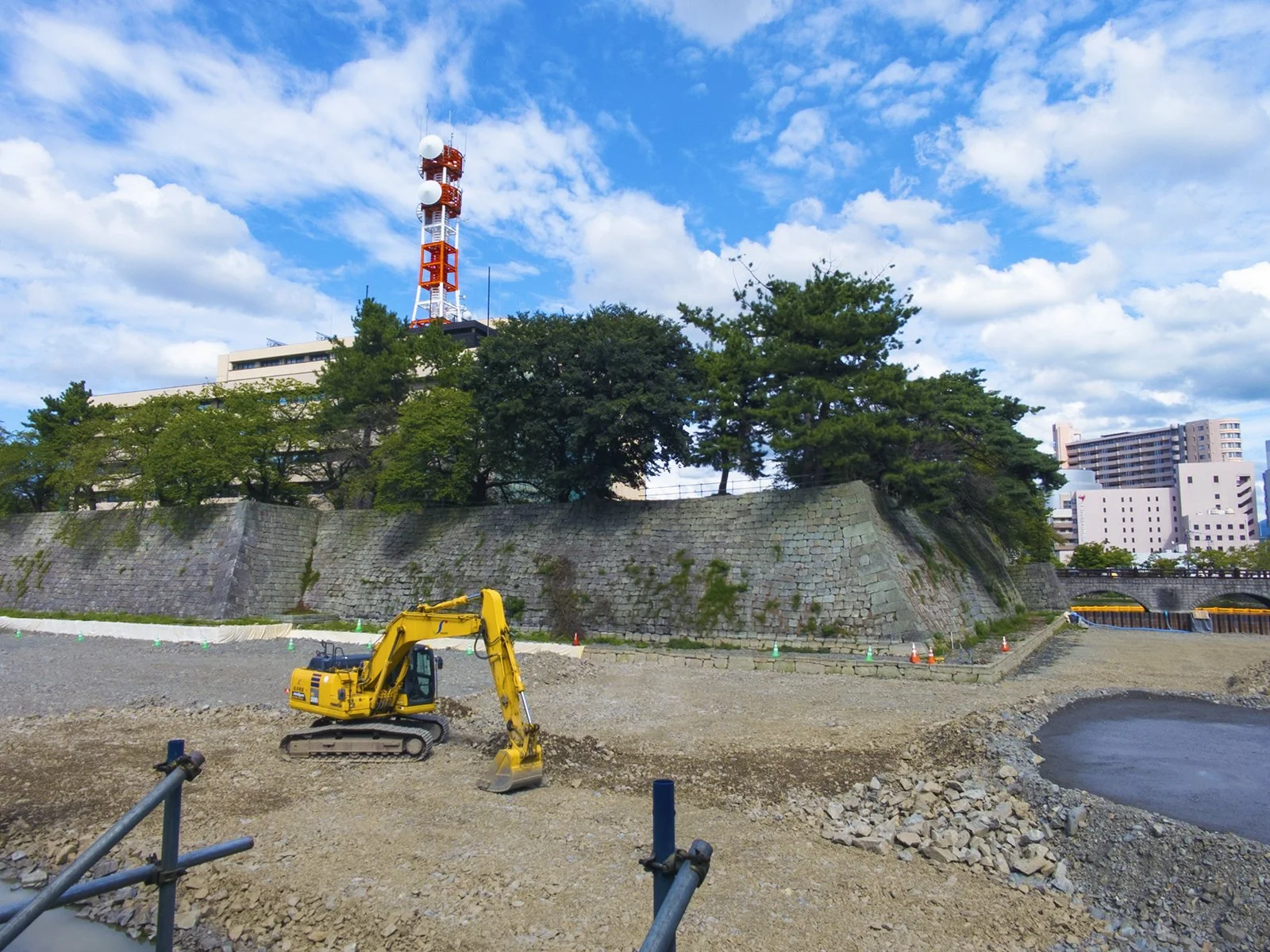
Cover photo: The southwestern portion of Fukui Castle moat is drained in preparation for the Kun-Yagura Restoration Project, Fukui Castle Ruins, Fukui, Japan (2025). Photo by Danny With Love.
Fukui Castle Reconstruction
Fukui, Japan — Reconstruction work on Fukui Castle’s southwestern tower, Kun-Yagura (坤櫓), is underway as part of a major effort to restore one of the city’s historic sites. Led by the Fukui Prefectural Government, the project seeks to enhance the castle’s cultural value and tourist appeal. Kun-Yagura is scheduled for completion in fiscal year 2029 and the tower will be a striking landmark visible from nearby Fukui Station.
About Fukui Castle
Fukui Castle (Fukui-jo) was completed in 1606 by Hideyasu Yuki (結城 秀康), the first lord of Fukui Domain and second son of shogun Tokugawa Ieyasu (徳川 家康). Hideyasu was appointed domain lord after the pivotal Battle of Sekigahara.
Hideyasu established the complex on the site of the lost Kitanosho Castle, ruled by Shibata Katsuie (柴田 勝家). It’s said that the keeps were designed by Ieyasu himself. Sadly, Fukui Castle was destroyed by a major fire in 1669.
Some structures — including Kun-Yagura — were rebuilt but demolished during Meiji Restoration, which ended feudal domains to create the current prefectural system. Unlike many castles around Japan, Fukui Castle is rare in that the inner moat was preserved.
Today, the Fukui Castle Ruins are the site of the Fukui Prefectural Government Office. It’s often joked to be the best-defended office in Japan!
Kun-Yagura Restoration Project
Located on the southwestern corner of the castle complex, Kun-Yagura was a five-storied building with a three-tiered roof. It functioned as both a lookout tower and document storehouse.
Preparations for Kun-Yagura’s reconstruction began in July. The project requires draining a portion of the moat for wall reinforcement and equipment access. The structure will be built using donated Shakudani (笏谷) stone, a teal-tinted volcanic ash stone once mined from local Asuwa Mountain.
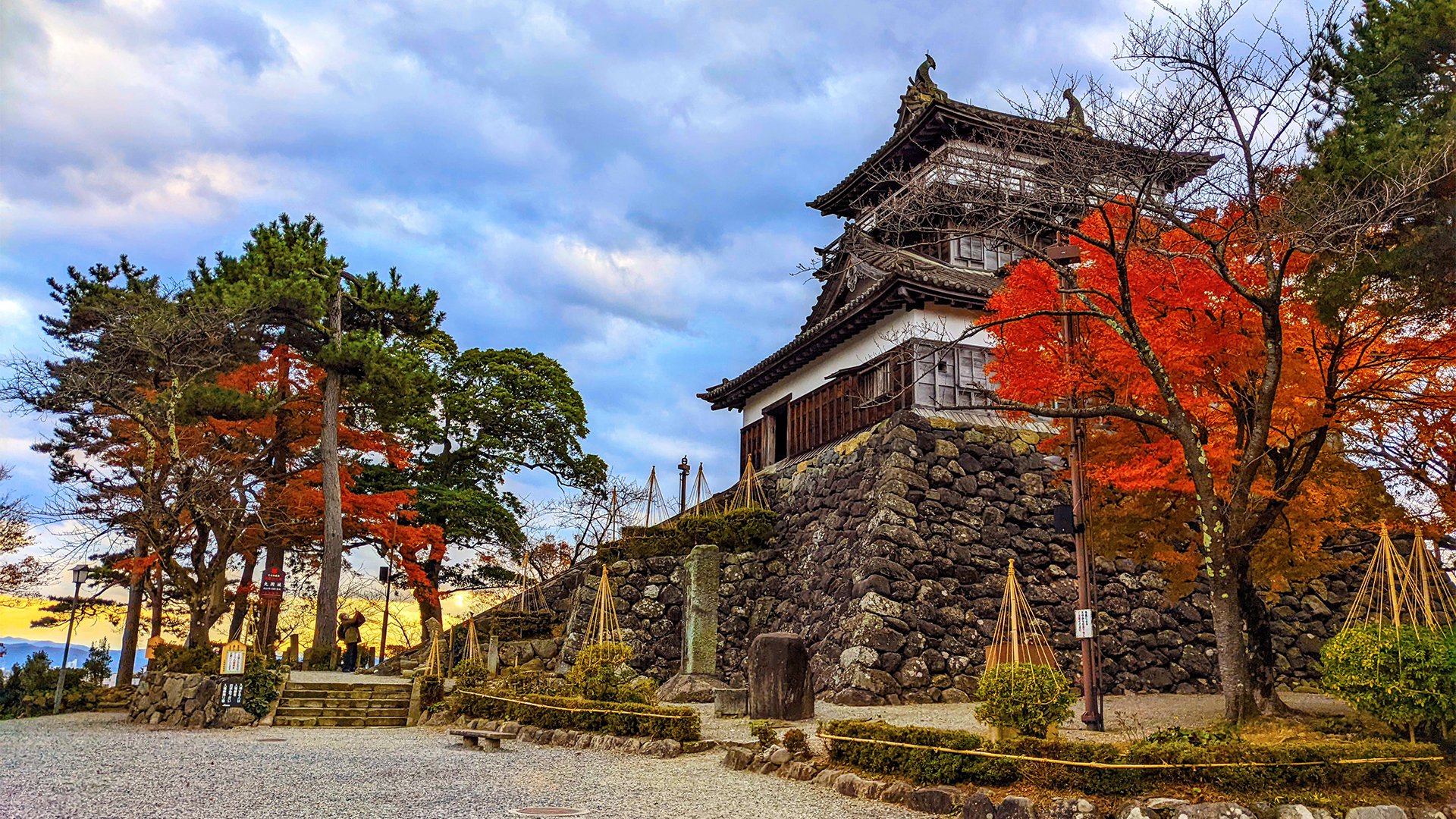
The tower will be 16 meters (52 feet) high, surpassing Maruoka Castle. An exterior elevator will provide barrier-free access. The project is expected to cost 4 billion yen (approximately 25 million USD).
Kun-Yagura will help convey the history and charm of Fukui. A government representative says, “A castle visible from the Shinkansen station is a rare sight nationwide, so we hope you will look forward to its restoration.”
Visiting Fukui Castle
Less than ten-minutes by foot from Fukui Station, Fukui Castle Ruins remain free to enter and explore. Highlights include Orouka Bridge (御廊下橋) and Yamazato-guchi Gate (山里口御門), the Statue of Yuki Hideyasu on Horseback, and “Fuku-no-I” (“Well of Fortune”) — the origin of Fukui’s name! The ruins are especially beautiful in cherry blossom season (late March to early April).
Fukui Reporter Disclosure
As part of the Fukui Reporter program, I am tasked with participating in local events and publicly promoting the prefecture. This is a volunteer position that allows me free entrance to a selection of museums throughout the area. The opinions I share are my own.