Visiting Fukui’s Awara Onsen
The hot spring town ranks among the best in Japan.
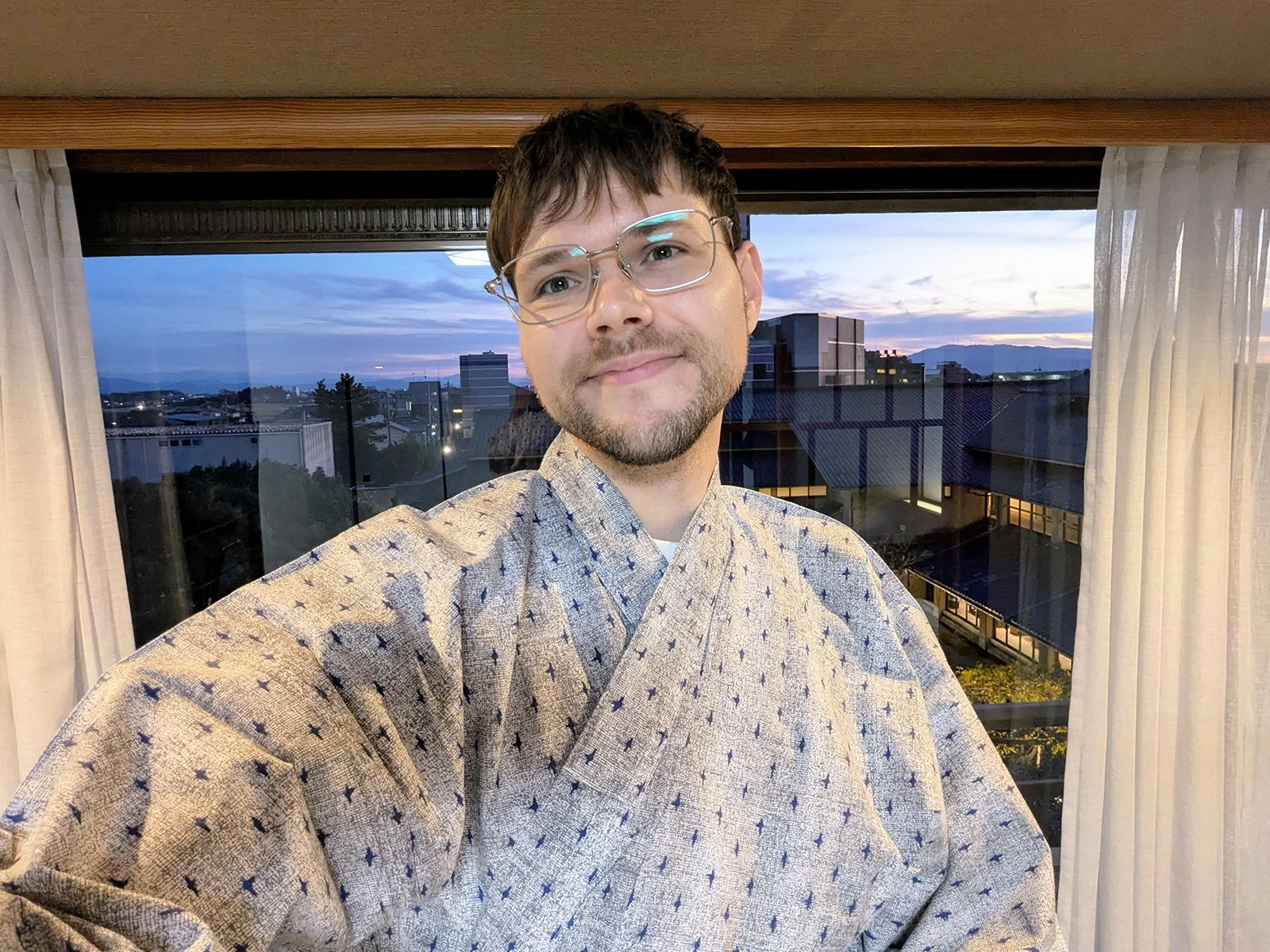
Cover photo: Posing in yukata inside Minoya Taiheikaku (みのや泰平閣), Awara, Fukui Prefecture, Japan (2025). Photo by Danny With Love.
Awara Onsen
Fukui Prefecture — Awara Onsen was recently ranked the seventh-best hot spring town in Japan! This year marks its first-ever entry into the national top ten, thanks largely to the new Hokuriku Shinkansen (bullet train) extension connecting Fukui to Tokyo.
Known for fresh seafood from the Sea of Japan and a peaceful atmosphere, the quiet town is a perfect destination for travelers seeking a relaxing retreat. Awara Onsen boasts 74 unique hot spring sources and 30 accommodation facilities, catering to a wide range of budgets. What is the history of Awara Onsen and what is there to enjoy? Read on for more.
Awara Onsen History
Awara Onsen (あわら 温泉) is a unique hot spring resort located on the flat plains of Fukui Prefecture — an unusual setting compared to Japan’s many mountainous onsen towns. Its natural springs were discovered in 1883, and by 1907, 25 ryokan had opened. The expansion of local railways established Awara as a major hot spring destination.
Famed poet Yosano Akiko (与謝野晶子) wrote upon visiting, “In Echizen, at the hot springs of Awara, snow glows softly — the dawn’s color, wondrously pure.” Her poem is commemorated on a monument by Fukui Bank Awara Branch.
Awara Onsen has endured multiple disasters including the Fukui Earthquake of 1948 and Awara Great Fire of 1956, which destroyed 16 inns and over 300 homes. Despite setbacks, the town has rebuilt and continued to thrive.
Most notably, Awara Onsen was favored by Showa Emperor Hirohito (昭和天皇裕仁). Today, the town is gaining renewed attention thanks to the Hokuriku Shinkansen (bullet train), which extended into Fukui Prefecture in 2024, making Awara Onsen more accessible than ever.
Top Things to do at Awara Onsen
Stay at a Traditional Ryokan
The best way to experience Awara Onsen is by staying overnight at a ryokan, or traditional Japanese inn. Guests can relax in natural hot spring baths, wear yukata, and enjoy exquisite kaiseki meals with seasonal ingredients. Awara offers accommodations for a wide range of budgets, from luxury ryokan to more affordable inns.
Buy Souvenir Sweets at Asano Kogetsudo
Founded in 1899, Asano Kogetsudo (御菓子司 浅野耕月堂) is an historic confectionary famous for its signature meringue cookies called “Matsu-no-tsuyu” (“Pine Dew”). Made with only egg whites and sugar, and dusted with coffee powder, these delicate sweets were enjoyed by Showa Emperor Hirohito (昭和天皇裕仁). They make an elegant and lightweight souvenir. A small box costs 540 yen (about 3.5 USD).
Admire Local Mascot Yumeguri Gonzo
Awara’s official mascot is adorable Yumeguri Gonzo (湯巡権三) with a steaming bathtub for a head! “Yumeguri” means “hot spring hopping.” Gonzo and his Yumeguri family appear throughout the town on signage, advertisements, and souvenirs, including at Awara Tourist Information Center.
Cook an Onsen Egg at Sentopia Awara
At public bath facility Sentopia (Saintpia) Awara (セントピアあわら), visitors can cook their own onsen tamago using naturally heated spring water! Eggs cost between 70 to 120 yen (about 1 USD) and the process takes nearly one hour.
Relax at Ashiyu Footbaths
One of Awara Onsen’s most famous landmarks is Ashiyu (芦湯), a beautiful public foot bath facility made of cypress and local Shakudani stone. Decorated with stained glass and colorful lanterns, it’s especially beautiful at night. Because foot baths are not gender-segregated, they’re popular with couples and groups of friends. A 100-yen (about 1 USD) donation is requested.
Take Photos at Awara Photospot
Visitors can snap free photos at Awara Photospot (あわらロマン館), a decorated space equipped with a camera stand and playful props. For a more immersive experience, a professional kimono rental and photoshoot is also available at Awara Onsen Traditional Performing Arts Hall (あわら温泉湯のまち 伝統芸能館) — advance reservation required.
Visit the Fujino Genkuro Memorial Museum
Awara is the birthplace of physician and professor Fujino Genkuro (藤野厳九郎), best known as mentor to Lu Xun (魯迅), considered China’s greatest modern writer. His former residence now serves as the Fujino Genkuro Memorial Museum, a registered tangible cultural building. Admission is 210 yen (about 1.5 USD).
Take a Side Trip to Tojinbo Cliffs
A visit to Awara Onsen pairs perfectly with a trip to seaside Tojinbo Cliffs, easily reached by bus or taxi. Formed by volcanic activity millions of years ago, these rugged columns are a rare geological phenomenon. Sightseeing cruises are available for 1,800 yen (about 12 USD).
Fukui Reporter Disclaimer
As part of the Fukui Reporter program, I am tasked with participating in local events and publicly promoting the prefecture. This is a volunteer position that allows me free entrance to a selection of sites throughout the area, including Sentopia (Saintpia) Awara and the Fujino Genkuro Memorial Museum. The opinions I share are my own.