Bass Pro Shops at the Pyramid
Visiting America’s most unusual tourist attraction.
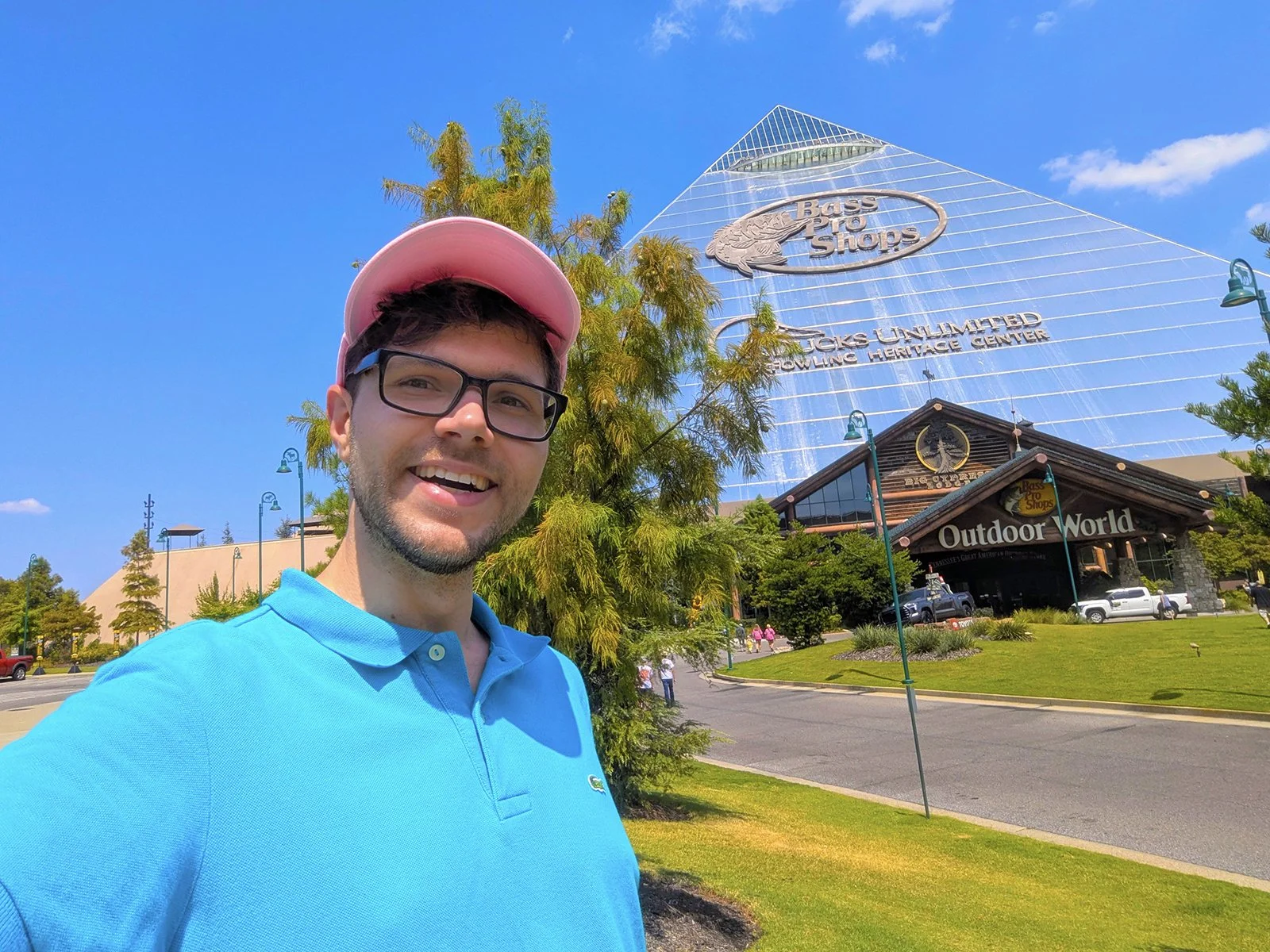
Cover photo: Posing outside Bass Pro Shops at the Pyramid, Memphis, Tennessee, United States (2026). Photo by Danny With Love.
America’s Pyramid
Memphis, Tennessee — I had long wanted to visit Bass Pro Shops at the Pyramid. One of the world’s largest pyramids, this striking and distinctly American attraction combines retail with a cypress swamp, glass-floored observation deck, restaurant, and hotel. For about $10, visitors can ride to the top on the tallest freestanding elevator in the United States, which rises 28 stories.
History of the Memphis Pyramid
“The Pyramid project began in the late 1980s as a nod to the Egyptian roots of Memphis’s name and an investment in the core of a city still trying to recover from the trauma of the assassination of the Rev. Dr. Martin Luther King Jr. in 1968,” wrote Richard Fausset for The New York Times.
The publicly funded Pyramid Arena opened in 1991. It hosted basketball games, concerts, and other events, but its unconventional design proved difficult. “The acoustics were a challenge,” explains musician Bob Seger, who played the arena’s final concert in 2007.
According to company lore, Bass Pro Shops founder Johnny Morris was inspired to move into the building after a friend caught a 30-pound catfish on the Mississippi River in 2005. Bass Pro Shops at the Pyramid opened in 2015 as “one of the most dynamic, immersive retail experiences in the world.”
Reuse Success Story
Bass Pro Shops at the Pyramid drew 3 million visitors in its first year, six times the reported attendance at Elvis Presley’s Graceland Mansion. Visitor numbers have since settled to an average 2 million annually.
Bass Pro Shops leases the building from the City of Memphis. The Pyramid contributes to the Downtown Tourism Development Zone (TDZ), which directs sales tax revenue to help fund redevelopment. In 2018, the TDZ generated a reported surplus of about $5 million. These funds are restricted to state-approved tourism-related projects within the zone.
What was once a vacant pyramid is now a distinctive tourist attraction. According to design podcast 99% Invisible, “it represents a productive reuse of a very unusual building.” Memphis basketball coach and former professional player Anfernee “Penny” Hardaway concludes, “It’s a gift to the city.”